
Maintenance & Care
Proper maintenance extends the life and visual clarity of your mirror, glass, accessory, and shelving products.
Follow these care guidelines to avoid damage and maintain warranty coverage.
MIRROR CARE
To preserve the quality and appearance of your mirror product, please follow the care instructions below.
PROTECT EDGES AND BACKING
The most vulnerable areas of a mirror are its edges and backing.
• Do not allow cleaning liquids to run down or pool at the edges
• Never use adhesives, tapes, or hooks directly on the mirror surface or backing
USE ONLY APPROVED CLEANING PRODUCTS
Clean mirrors with a non-abrasive glass cleaner or a solution of mild soap and water.
• DO NOT use cleaners that contain ammonia, vinegar, bleach, or other corrosive chemicals
• Spray liquids onto a cloth, not directly on the mirror, to prevent seepage behind the frame or glass
USE SOFT, LINT-FREE CLOTHS
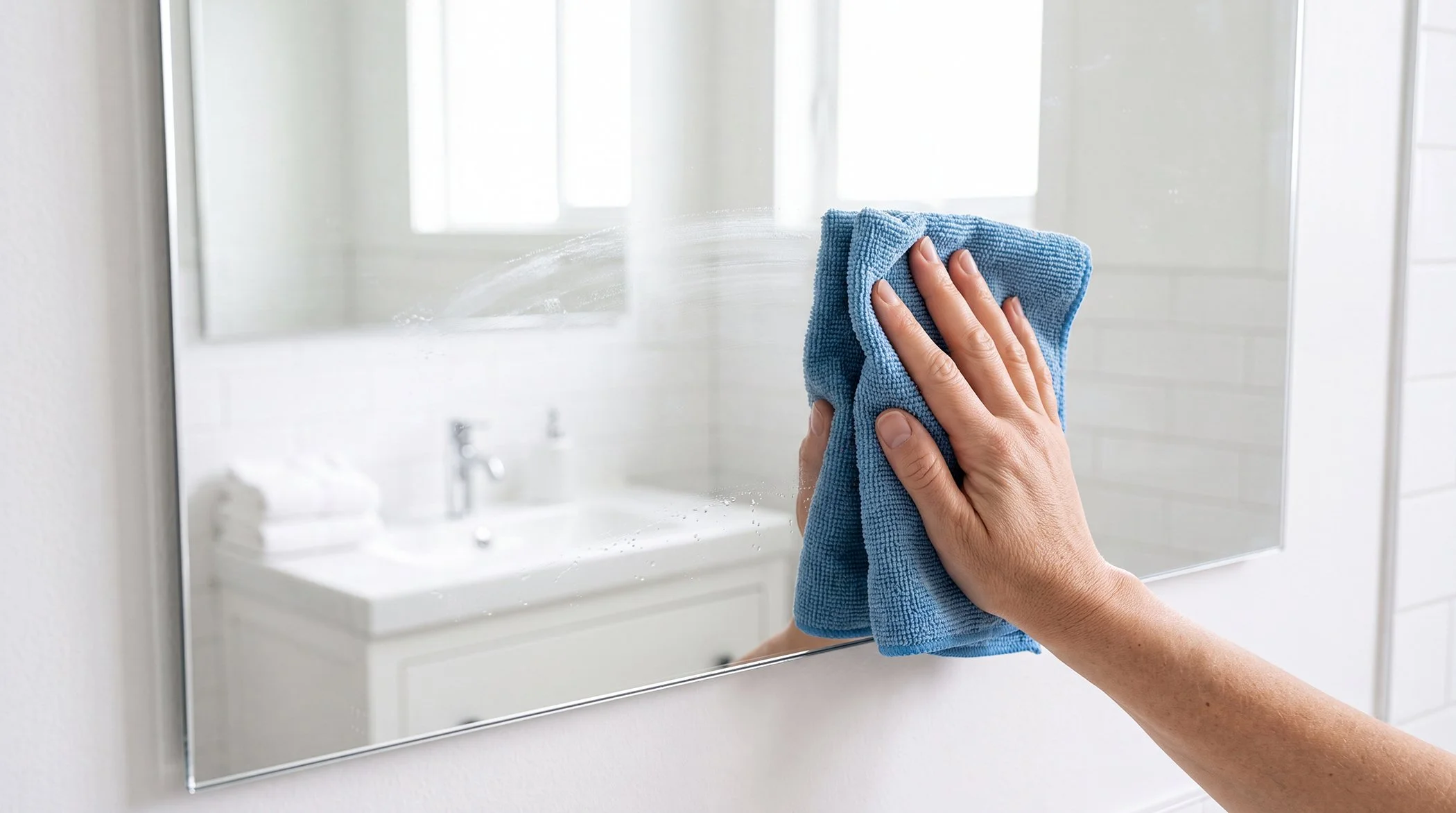
Wipe mirrors with a microfiber or soft cotton cloth to prevent scratching the glass or edges.
• Avoid paper towels, scouring pads, or any abrasive materials
REGULAR INSPECTION
Inspect mirrors periodically for signs of deterioration, spotting, or discoloration.
• Early detection can help identify environmental issues or improper cleaning practices
PREVENT MOISTURE BUILDUP
Keep mirrors dry to prevent desilvering and edge corrosion.
• Avoid leaving water or cleaner residue on edges
• In bathrooms, ensure proper ventilation to minimize long-term humidity exposure
WARRANTY REMINDER
Damage caused by improper handling and storage voids the warranty.
Shower Door Care
Following these simple care instructions will help to keep the glass clear, protect the hardware and finishes, and preserve the silicone seals that help keep water where it belongs.
1. Allow the Shower to Cure After Installation
After your shower door is installed:
Do not use the shower for at least 24 hours, or for the amount of time specifically recommended by your installer.
Do not touch, wipe, clean, or disturb freshly applied silicone during the curing period.
Do not pull on or adjust panels, hardware, seals, or sweeps.
Silicone may appear dry on the surface before it has completely cured underneath.
2. Rinse and Dry the Glass Regularly
The easiest way to keep shower glass clean is to prevent mineral deposits and soap residue from building up in the first place.
After showering:
Rinse away excess soap or shampoo residue when possible.
Use a quality shower squeegee to remove water from the glass.
Pay particular attention to the lower portion of the glass where water tends to collect.
For the best results, dry remaining water with a clean, high-quality microfiber cloth.
This is especially important in homes with hard water.
3. Clean the Glass Regularly
For normal cleaning, we recommend a mild cleaning solution rather than harsh glass or bathroom chemicals.
Recommended Cleaning Method
Wet the glass with warm water.
Apply a small amount of mild dish soap, such as Dawn, diluted with water.
Gently clean the glass using a soft microfiber cloth, soft sponge, or non-abrasive shower loofah.
Rinse thoroughly with clean water.
Squeegee the glass.
Dry with a clean microfiber cloth to help prevent water spots.
Regular light cleaning is much better for your shower than allowing heavy buildup to develop and then attempting to scrub it away.
4. Avoid Harsh or Abrasive Cleaners
DO NOT use abrasive cleaners or abrasive cleaning tools on your shower enclosure.
Avoid:
Ammonia-based or harsh chemical glass cleaners
Abrasive powders or cream cleansers
Scouring pads
Steel wool
Razor blades or metal scrapers
Rough brushes
Highly acidic or highly alkaline cleaners
Any cleaner that requires aggressive scrubbing
These products can damage glass treatments, hardware finishes, seals, and other components of your shower enclosure.
When in doubt, mild soap and water is the safest choice.
5. Take Special Care Around Silicone
The silicone around your shower enclosure is an important part of the installation and should be treated carefully.
Do not scrub, scrape, pick, pull, or aggressively clean silicone joints.
When cleaning near silicone:
Use a soft cloth or sponge.
Wipe gently along the silicone rather than scrubbing across it.
Do not use razor blades, brushes, abrasive pads, or sharp objects against silicone.
Do not intentionally pull or peel silicone that appears loose.
Over time, silicone can naturally require maintenance or replacement. If you notice separation, gaps, peeling, or deterioration, contact Revelation Installations rather than attempting to remove or repair the silicone yourself.
6. Care for Hardware and Metal Finishes
Shower hardware should also be cleaned gently.
Wipe hardware with a damp, soft microfiber cloth.
For additional cleaning, use mild soap and water.
Rinse away any soap residue.
Dry hardware with a clean microfiber cloth.
Avoid abrasive cleaners, harsh chemicals, rough sponges, and prolonged exposure to bathroom cleaning products. These can discolor or damage certain hardware finishes.
Do not spray strong bathroom cleaners directly onto hinges, clamps, handles, channels, or other hardware.
7. Check Your Shower Periodically
Every few months, take a quick look at your enclosure.
Check for:
Loose handles or knobs
Loose or unusual movement in hardware
Damaged door sweeps or seals
Silicone separation or deterioration
Glass contacting another hard surface
Changes in door alignment
Never attempt to adjust frameless shower hinges or glass panels yourself. Tempered glass is extremely strong but can be damaged if improperly handled or allowed to contact a hard surface.
If something does not look or operate correctly, contact Revelation Installations.
EnduroShield® Protected Glass
This section applies only to shower glass that was purchased with EnduroShield protective coating.
EnduroShield is designed to make shower glass easier to maintain by reducing the ability of water, minerals, soap scum, and grime to bond to the glass. It does not make the glass maintenance-free. Regular light cleaning will provide the best long-term results.
Daily / After-Shower Care
For the easiest maintenance:
Remove excess water with a quality squeegee after showering.
If the glass is already mostly or completely dry, simply buff it with a clean, high-quality microfiber cloth.
Avoid allowing water droplets and mineral deposits to repeatedly dry on the glass.
In many cases, a dry microfiber cloth is all that is needed to remove light spotting or residue from EnduroShield-treated glass.
Weekly Cleaning
For routine cleaning:
Wet the glass.
Apply a small amount of mild, non-abrasive dish soap such as Dawn diluted with water.
Gently clean using a soft microfiber cloth or non-abrasive loofah.
Rinse thoroughly with clean water.
Squeegee or dry the glass with a clean microfiber cloth.
Do not aggressively scrub EnduroShield-treated glass. The coating is intended to make contaminants easier to remove, so gentle cleaning should be your first approach.
Hard Water & Mineral Buildup
Even EnduroShield-treated glass can develop mineral buildup, especially in homes with hard water.
For mineral deposits, EnduroShield recommends a solution of approximately:
1 part white vinegar to 4 parts water
Apply the solution to the glass, allow it to work for several minutes, gently wipe with a microfiber cloth, then rinse thoroughly and dry.
Regular cleaning is much easier than removing mineral deposits after they have accumulated for an extended period.
What NOT to Use on EnduroShield
Avoid:
Rough or gritty cleaners (including cleaners with ammonia, i.e. regular windex
Abrasive powders
Scouring pads
Steel wool
Abrasive brushes
Aggressive polishing compounds
Highly acidic cleaners
Highly alkaline cleaners
Any product or tool that requires aggressive scrubbing
When using any cleaning product on EnduroShield-treated glass, rinse the glass thoroughly with clean water afterward.
The Simple EnduroShield Rule
Keep it simple: squeegee or microfiber regularly, use mild soap and water when needed, and don’t let mineral buildup accumulate.
With proper care, EnduroShield-treated glass should remain significantly easier to clean and maintain than untreated shower glass.
Shelving FAQ & Care
How can I remove labels or stickers on wire units and hardware?
The labels are designed to be removable without any type of cleaner, but if they’re not peeling off easily, you can use a product like Goo Gone®.
Can the laminate panels be painted?
No. The laminate will not absorb the paint.
Yes, your fabric drawers can be surface washed. We recommend using a damp cloth and a non-abrasive cleaner.
How do I clean my wire shelves and remove labels or store stickers from my shelving?
We recommend using Goo Gone® to clean wire shelves and remove product label stickers from your wire shelving. You can easily find this product in your local hardware store.
Is my laminate unit waterproof?
No, laminate products are not waterproof.
Revelation Installations has Cleaning Kits for sale.
Speak with your installer or design consultant, or call the office, 334-233-6271.
Keeping your new laminate shelving, door, and drawer fronts clean is quick and easy.
Regular Cleaning
Gently wipe surfaces with a soft cloth or sponge and a mild soap and water solution
Heavy pressure and continuous scrubbing are not recommended
Cleaning of Stains
Whenever possible avoid spraying any product directly on the surface and test in a non-visual location
Common household cleaners without abrasives
Diluted rubbing alcohol will remove most ink stains
A small amount of Dawn dish soap diluted or Simple Green® in a 50/50 mix with water are good degreasers
Always use a soft damp cloth or sponge to gently wipe the surface, 10-20 strokes should remove most stains.
Cleaning Products to Avoid
Products containing acetone, acid, and ammonia
Solvent based cleaners, paint thinners, wood preservatives
Any abrasive liquid or powder cleansers
Any abrasive material, brush, scouring pads or scraper
PLEASE NOTE: Use of any cleaning agent outlined under “Cleaning Products to Avoid” will void the warranty.